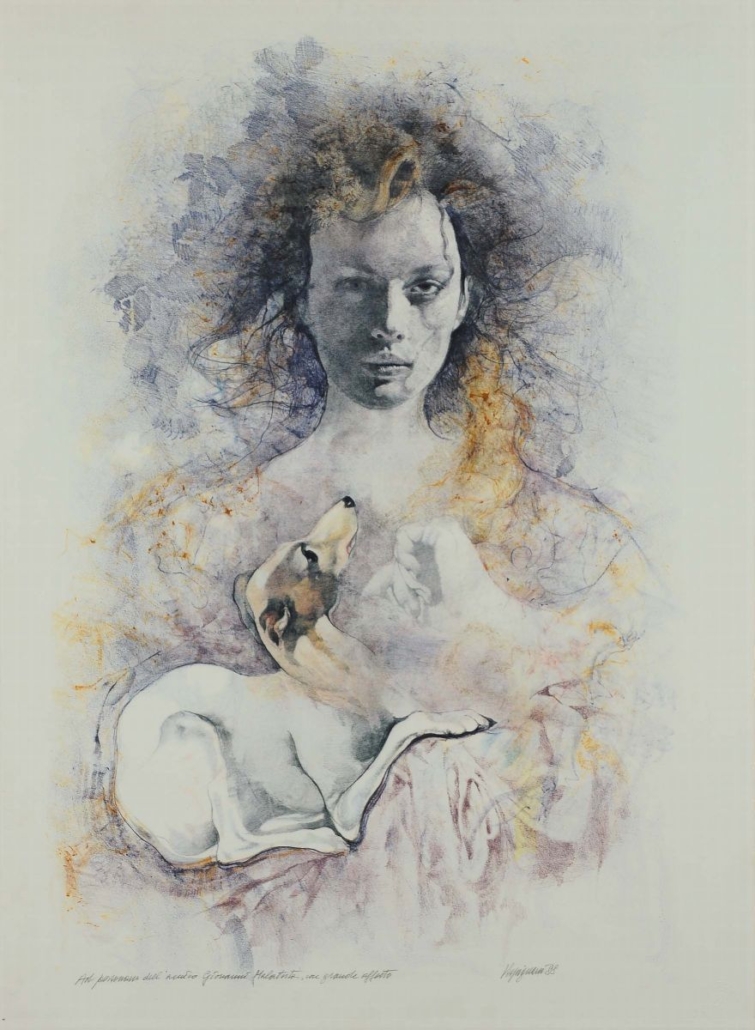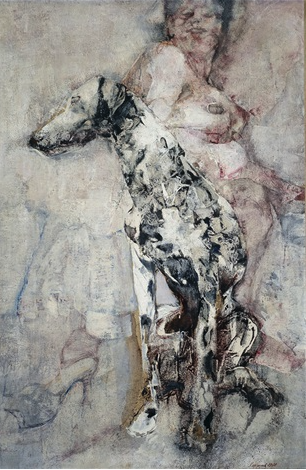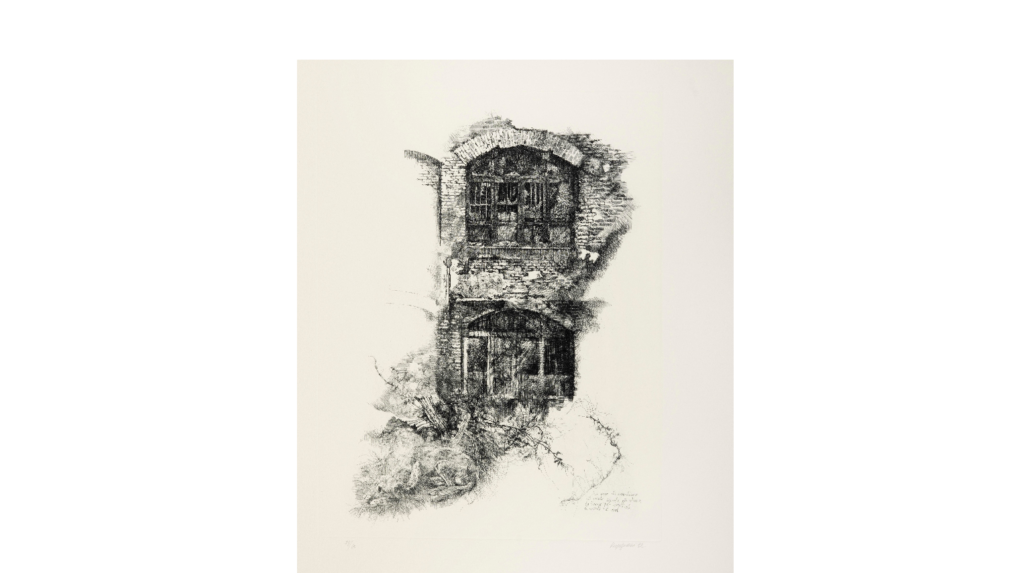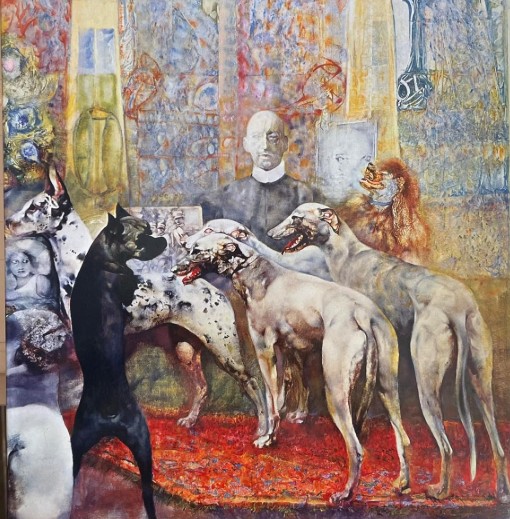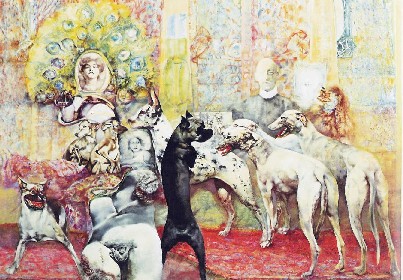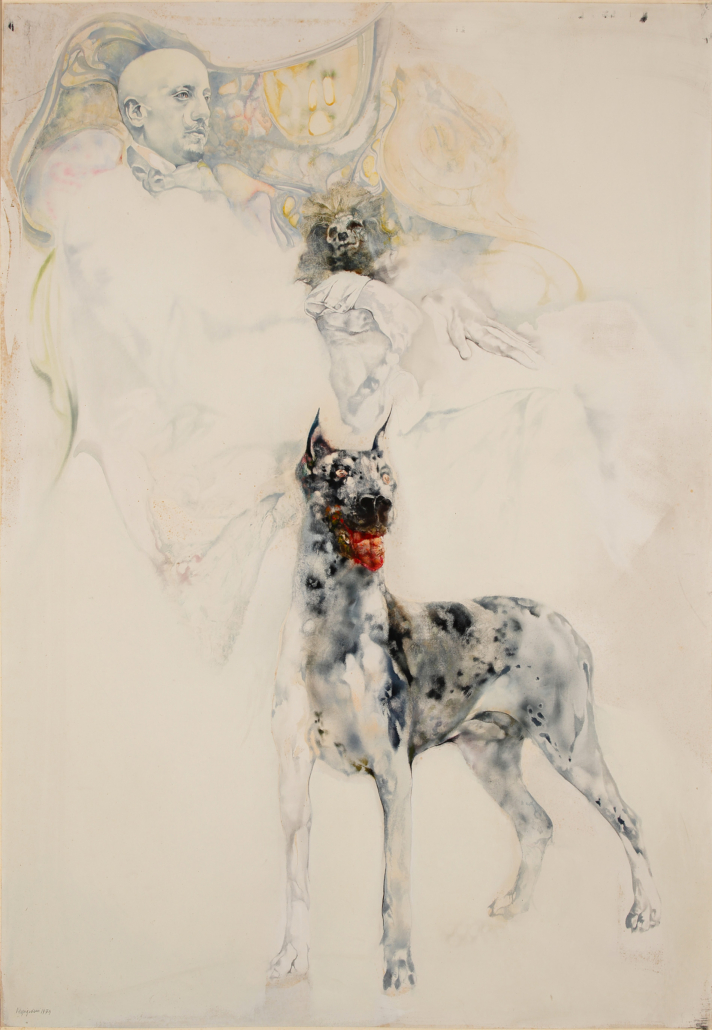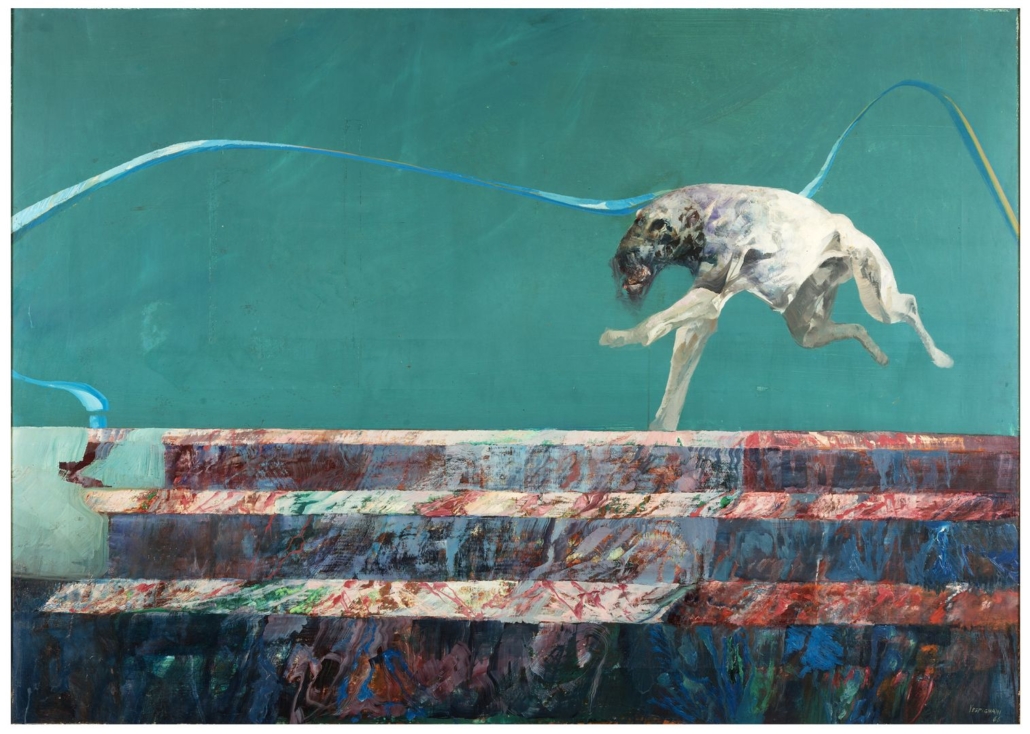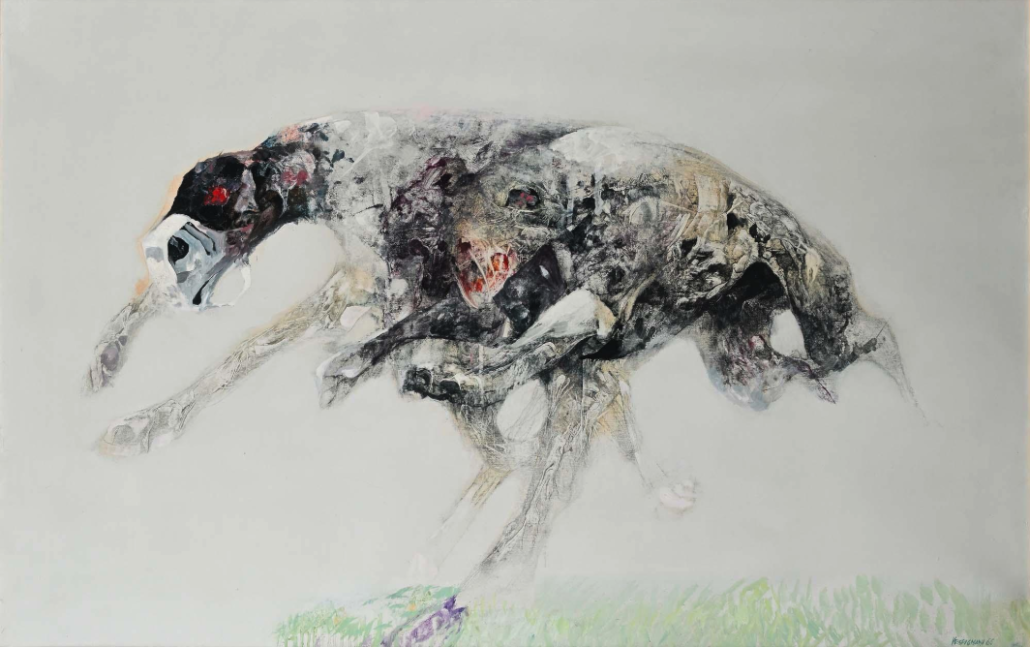

Renzo Vespignani (born Lorenzo Vespignani; Rome, 19 February 1924 – Rome, 26 April 2001) was an Italian painter, illustrator, printmaker and stage designer whose work stands among the most distinctive expressions of post-war Italian realism.
After the early death of his father, a respected surgeon and cardiologist, Vespignani grew up in the working-class district of Portonaccio, near San Lorenzo in Rome. During the Nazi occupation of the city, he began drawing while living in hiding, documenting the devastated urban landscape around him: bombed streets, ruined buildings, poverty and the lives of those pushed to the margins of society. These experiences would leave a lasting mark on his artistic vision.
He received his first training under the engraver Lino Bianchi Barriviera and was influenced by artists such as Alberto Ziveri and Luigi Bartolini, as well as by the expressive force of George Grosz and Otto Dix. In 1945 he held his first solo exhibition in Rome and soon began contributing illustrations, satirical drawings and writings to several literary and political journals.
Throughout his long career, Vespignani explored the contradictions of modern society through painting, drawing and printmaking. From the immediate post-war years to the great cycles of his maturity, his work examined the fragility of everyday life, the anxieties of the middle class and the moral tensions of contemporary existence. Among his most important series are Imbarco per Citera (1969), Album di Famiglia (1971), Tra due guerre (1973–1975), and Come mosche nel miele (1984), dedicated to Pier Paolo Pasolini.
His relationship with literature was equally profound. Vespignani illustrated works by Giovanni Boccaccio, Giacomo Leopardi, Vladimir Mayakovsky, T. S. Eliot, Franz Kafka, Giuseppe Gioachino Belli, Carlo Porta and François Villon, bringing to each text the same intensity and humanity that characterised his painting.
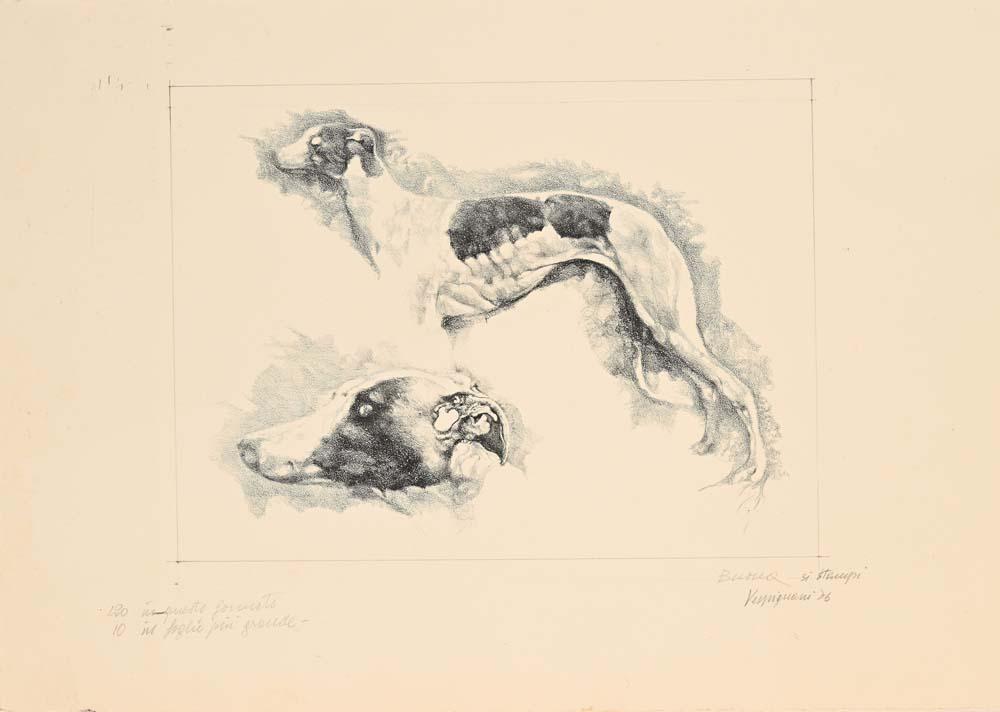
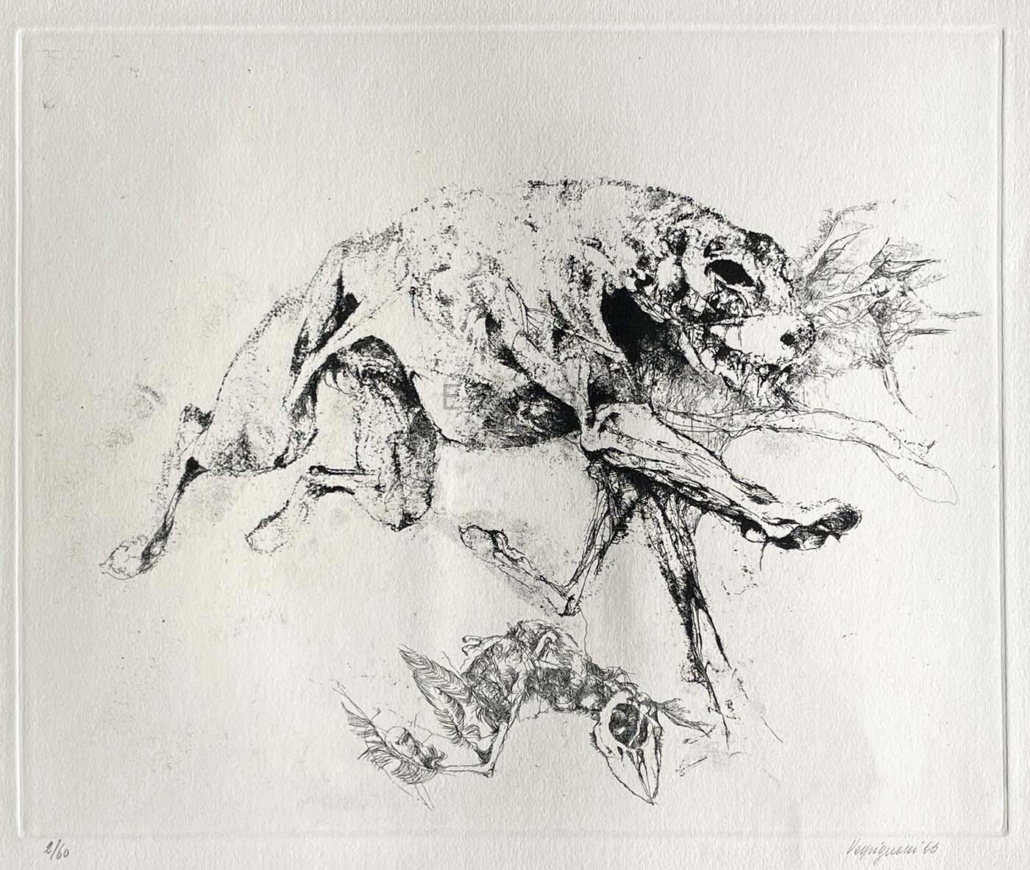
Alongside his activity as a painter and printmaker, he worked extensively as a stage designer for theatre and opera, collaborating on productions ranging from contemporary drama to musical works. Over the course of his career he produced more than four hundred graphic works, including etchings, lithographs and prints.
In 1999 he was elected President of the Accademia Nazionale di San Luca and was appointed Grand Officer of the Order of Merit of the Italian Republic.
Today, Renzo Vespignani’s works are held in numerous public collections and museums in Italy and abroad. Through an uncompromising visual language and a profound engagement with both history and literature, he offered one of the most powerful and poetic accounts of twentieth-century Italian experience.